Aquarium of Genoa Tickets: Prices, Queues & Smart Booking Tips
Genoa, ItalyAquariums★ 4.5 (10,691 reviews)
Aquarium of Genoa tickets are timed-entry, and booking online is the difference between walking in and standing in the Porto Antico sun. Here's what Italy's largest aquarium costs, which combo tickets are worth it, and when to go to have the tanks to yourself.
Check tickets on GetYourGuide ↗This is not the official website of Aquarium of Genoa. We're an independent guide; bookings happen on authorised platforms (Tiqets / GetYourGuide), and details are sourced from the official site.
Quick summary
| Tickets from | From around €35 (adult timed-entry ticket online) |
|---|---|
| Opening hours | Typically open daily from morning to evening, longer in summer — check the official calendar for your date |
| Book ahead? | Yes — timed slots skip the ticket queue, and summer and holiday slots fill up |
| Time to plan | 2.5–4 hours |
| Best time to visit | Weekday mornings year-round; it's a superb rainy-day plan |
Prices and hours are indicative, sourced from the park's official website and booking platforms — double-check before you go.
Which ticket should you buy?
| Option | Price | Best for | What's included |
|---|---|---|---|
| Standard timed-entry ticket | from ~€35 | Most visitors — the full aquarium at your own pace | All pavilions and tanks, including dolphins, sharks and manatees |
| Aquarium + Porto Antico combo | modest add-on to standard entry | Making a full day of the old port | Aquarium entry bundled with neighbouring Porto Antico attractions such as the Biosfera glass sphere and the Bigo panoramic lift |
| Reduced ticket (children/seniors) | lower — check current rates | Families and older visitors | Same access at a reduced rate; the smallest children enter free |
Inside the Aquarium of Genoa: what you’re paying for
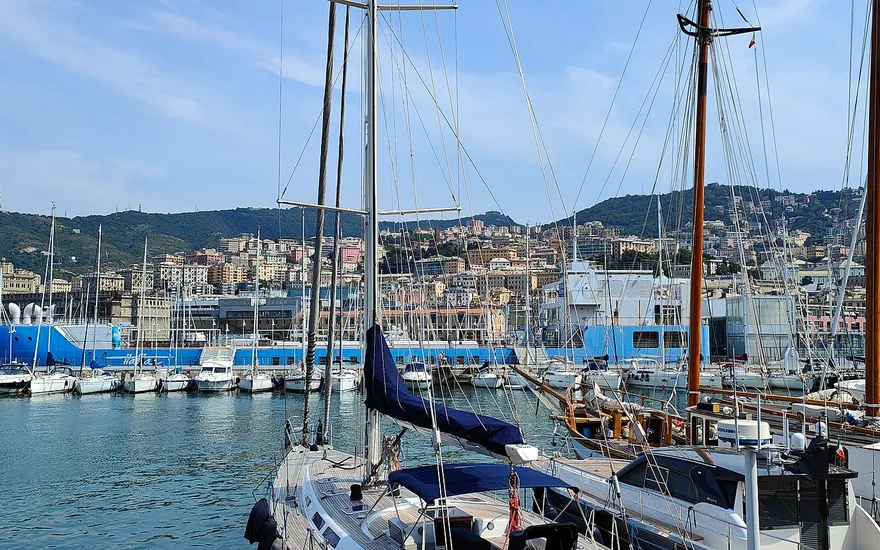
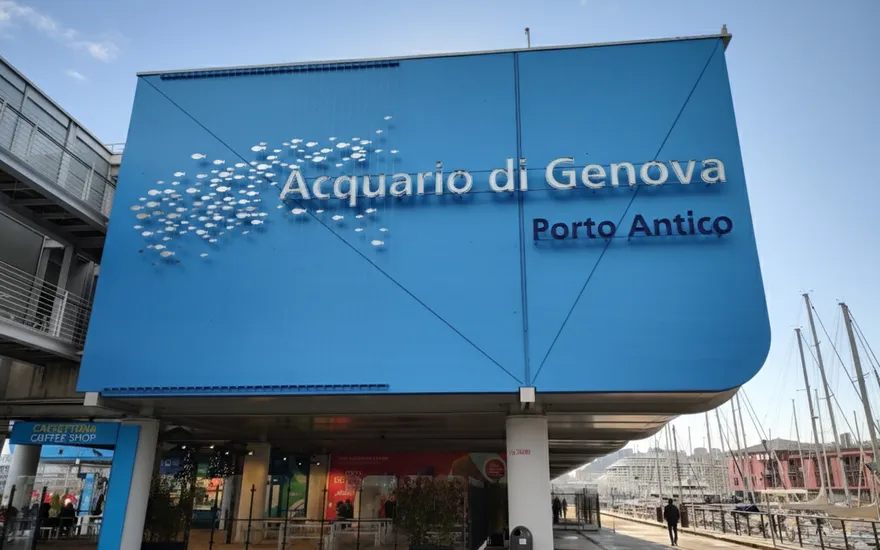
The Aquarium of Genoa (Acquario di Genova) is Italy’s largest aquarium and one of the biggest in Europe, moored like a ship on Ponte Spinola in Genoa’s Porto Antico — the old harbour rebuilt for the 1992 Columbus quincentenary under architect Renzo Piano, Genoa’s most famous modern son. It has been the city’s flagship attraction ever since.
Your ticket buys a one-way route through roughly 70 tanks and several pavilions, home to thousands of animals. The set pieces:
- Dolphins in the Cetacean Pavilion, with large above- and below-water viewing — time your visit to catch a training or feeding session.
- Sharks cruising one of the largest tanks in the building.
- Manatees — rare in European aquariums and a highlight for most visitors.
- Penguins, seals, jellyfish and rays, the last with a touch-friendly open tank that children gravitate to.
- Mediterranean and tropical reef tanks that reward slow viewing rather than a march-past.
The visit is indoor, climate-controlled and works in any weather — which is exactly why it fills up when the Ligurian coast turns grey. Realistically it’s a half-day attraction: 2.5–4 hours at a comfortable pace.
Who’s it for? Everyone from toddlers to grandparents — this is Genoa’s default family outing, and it earns the role. Thrill-seekers should look at Gardaland, two hours east; this is a watch-and-wonder day, not a ride day.
Timing is everything
- Quietest: weekday mornings outside Italian school holidays, especially the first slot of the day. Late-afternoon slots also thin out as day-trippers leave.
- Busiest: Sundays and public holidays year-round, all of August, and — counterintuitively — rainy summer days, when the entire Riviera decamps indoors. Cruise-ship arrivals can spike mid-morning crowds too.
- School groups dominate weekday mornings in spring; they’re usually gone by early afternoon.
Book the earliest slot you can manage and do the route once at your own pace — the one-way flow means you can’t easily double back against heavy traffic later in the day. Check the day’s feeding and talk times on arrival and position yourself at the dolphin tank a few minutes early; the glass fills three-deep on busy days.
Insider tip: On crowded days, walk the busiest set-piece tanks a second time in the final hour before closing — the halls empty noticeably, and you’ll get the front-of-glass views the midday crowd never sees.
How to save on tickets
- Book online for a dated, timed slot. Prices start around €35 on the official site and resale platforms like GetYourGuide, you skip the ticket desk, and off-peak dates are sometimes cheaper than holiday ones.
- Reduced tickets apply for children and seniors, with the youngest free — exact age bands are on the official site.
- Porto Antico combos bundle the aquarium with neighbours like the Biosfera (Renzo Piano’s glass sphere of tropical plants) and the Bigo panoramic lift for less than separate tickets — worth it if you’re spending the day at the harbour.
- Families: look for family bundles online before buying four singles; when offered, they undercut individual pricing.
- If your dates are flexible, a grey-sky Tuesday in November costs less stress (and often less money) than any August Sunday.
Getting there without the hassle
The aquarium is in central Genoa, so arrive like a local — without a car:
- By metro: San Giorgio station is a few minutes’ walk from the entrance.
- By train: from Genova Piazza Principe it’s a 15–20 minute walk or a short metro hop; Genova Brignole works too. Genoa is about 1.5–2 hours by train from Milan and under 2 from Turin, making a car-free day trip realistic.
- By car: the medieval old town is no place to drive. If you must, use the Porto Antico paid car parks and walk.
- By air: Genoa’s own airport is 15–20 minutes away; Milan’s airports serve most international visitors.
Make it a trip
The aquarium anchors a full Porto Antico day:
- Galata Maritime Museum, the Bigo lift and the Biosfera are all within a few hundred metres.
- Genoa’s old town — Europe’s largest medieval centre — and the Via Garibaldi palaces are a ten-minute walk uphill.
- The Riviera: Boccadasse, Camogli and Portofino make classic add-on days along the coast.
- Further afield, pair Genoa with Leolandia near Bergamo for a kids’ theme-park day, or Ondaland in Piedmont for summer slides.
See more Italian ideas on the Italy destination hub or browse all zoos and aquariums.
FAQ — Aquarium of Genoa tickets
How much are Aquarium of Genoa tickets?
On the official site and resale platforms like GetYourGuide, adult timed-entry tickets start at around €35, with reduced prices for children and seniors and free entry for the smallest kids.
Do I need to book Aquarium of Genoa tickets in advance?
Yes, ideally. Entry is by timed slot, and booking online both locks your time and skips the ticket-desk queue, which gets long on summer days, weekends and rainy holidays.
How long does a visit to the Aquarium of Genoa take?
Most visitors spend 2.5 to 4 hours following the one-way route through the pavilions. Add more if you linger at the dolphin and shark tanks or visit at feeding times.
Is the Aquarium of Genoa worth it?
Yes — it's Italy's largest aquarium and one of Europe's biggest, with dolphins, sharks, manatees, penguins and some 70 tanks. It's widely considered Genoa's top attraction.
Is the aquarium good for a rainy day?
It's one of the best rainy-day attractions in northern Italy — almost everything is indoors. Just expect company: bad-weather days on the Ligurian coast push beach crowds through the doors, so book a morning slot.
How do I get to the Aquarium of Genoa?
It sits on Ponte Spinola in the Porto Antico, a short walk from the San Giorgio metro stop and about 15–20 minutes on foot from Genova Piazza Principe station. Driving into the old town isn't worth it — use the port car parks if you must.
Is the Aquarium of Genoa accessible for wheelchairs and pushchairs?
The visit route is designed to be accessible, with lifts between levels. Busy afternoons make manoeuvring slower, which is another argument for an early slot.
Guide last updated: August 2026. ThemeParkTickets.eu is an independent guide and not the official website of Aquarium of Genoa. Photos: Al*from*Lig (CC BY-SA 4.0), Dixy52 (CC0) via Wikimedia Commons.